

The Woodville family came to prominence in 1464 with the surprising marriage of Elizabeth Woodville to Edward IV. Since that time they have been broadly categorised as a parvenu family who were suddenly catapulted from obscurity. The family belonged to the South Northamptonshire “gentry”, that is, they were a family of some local importance who made occasional forays into national affairs. Their star began to rise in the 14th century, long before Edward IV ever set eyes on the beautiful Elizabeth Grey. Lord Rivers was an established member of King Henry VI’s council in the 1440s and, if the history of the 15th century was rewritten without the marriage of 1464, he would still have a place, albeit a minor one, in English history.The Woodvilles, as a family, have not always been kindly treated by historians; some criticism is merited, but much of the dismissive criticism is undeserved. Accordingly, a lot of attention has been given to the period between 1464 and 1483 and almost nothing to the Woodville hinterland. By delving into the early history of the Woodvilles, Bryan Dunleavy tries to provide a balanced view of the family and its leading protagonists.This account of the Woodville family starts with their first mention in the 13th century, through their rise to prominence in Northamptonshire in the 14th century, and through 60 years of royal service to the Lancastrian kings, almost a quarter century of service to the Yorkist kings and their final, less influential years with the Tudors. It was the family’s bad luck to leave no male heirs after 1491 and in that circumstance less power to influence events and its own history.The last Woodville descendent to create a ripple was Jane Grey, England’s queen for nine days in 1553.

Thomas William Shore (1840-1905) managed the Hartley Institution (later Southampton University) for 23 years in the 19th century. During his time in Southampton he was an energetic explorer of Hampshire’s history and the fruits of his labours were published in 1896. The book is a classic product of Victorian interest in local histo-ry, and is reprinted here with an introduction and additional notes by Frederick Moore. Shore is particularly strong when he writes about history that precedes the modern age and many of his stories and commentary are quite valid today.Shore’s particular gift is his ability to write in a style that can be easily read, and apart from references to to long-forgotten 19th century figures, this book should present no difficulty to the modern reader.

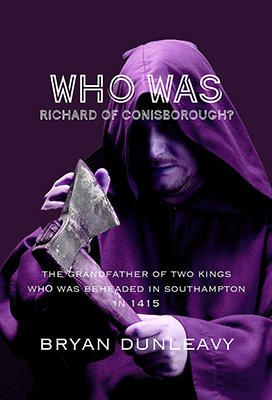
A plot to overthrow Henry V was betrayed on July 31st, 1415, just as the invasion of France was about to begin. The leader of the plot, Richard, Earl of Cambridge, and his co-conspirators, were tried, condemned and beheaded before the Southamp-ton’s Bargate on August 2nd and August 5th. Richard’s head and body were buried in the Chapel of St Julien on Winkle Street and were last seen in 1861.Henry V was able to set sail for France on August 11th and the expedition culminated in the glorious victory at Agincourt on October 25th.Through odd quirks of fortune two of Richard’s grandchildren became kings of England, as Edward IV and Richard III.In this book Bryan Dunleavy describes the background to the plot, the assorted plotters and the convergence of people and events on Southampton in July and August 1415.And there is a twist to the tale. Recent DNA evidence, coupled with historical information, suggests that Richard, Earl of Cam-bridge may not have been a Plantagenet after all!
Lorem ipsum dolor sit amet, consectetur adipiscing elit. Ut elit tellus, luctus nec ullamcorper mattis, pulvinar dapibus leo.

Lorem ipsum dolor sit amet, consectetur adipiscing elit. Ut elit tellus, luctus nec ullamcorper mattis, pulvinar dapibus leo.

Lorem ipsum dolor sit amet, consectetur adipiscing elit. Ut elit tellus, luctus nec ullamcorper mattis, pulvinar dapibus leo.