Edward Cooke Histories is an imprint focussed entirely on the history of places in the Milton Keynes area.
Edward Cooke (1772-1824) was the first native born historian of the district.
After completing his studies at Oxford he became vicar of Haversham.
Manno, a lord from Ercé en Lamée near Rennes in Brittany, led a contingent as part of the invading force in 1066. He was rewarded with lands stretching from South Buckinghamshire to Leicestershire. Accordingly, he established his castle and administrative centre at Wolverton. His descendant survived for over 300 years until 1391 when the Longueville family came into possession of Wolverton by marriage.
This book describes their landholdings and their history.
The de Wolverton family ran out of male heirs in the late 14th century and the estates were divided between various daughters and their husbands. The Wolverton manor came into the possession of Sir John Longueville of Billing.
The Longueville family prospered until the last part of the 17th century when they became heavily indebted. Sir Edward Longueville, the last of his line, sold the manor in 1713.
Milton Keynes was a new town in 1967, as was Wolverton in 1838. Les well-known is that Stony Stratford became a new town in the closing years of the 12th century. It grew quickly and by 1215 was able to host King John and his retinue for three days. Later is became an important staging post on the Watling Street.
In 1464, Elizabeth, daughter, of Sir Richard and Jacquetta Woodville, associated with the village of Grafton, sensationally married King Edward IV. She was one of a large and talented family and had brothers who were jousters, soldiers and statesmen and one who became Bishop of Salisbury. Her sisters married into several of the great families of the day.
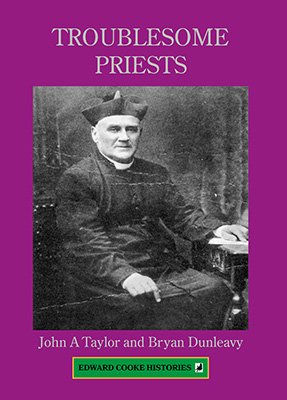
Priests were not always amenable characters. One vicar of Haversham murdered another man, as did the Prior of Tickford Abbey in Newport Pagnell.
This booklet tells the detailed stories of three strong-minded men who came into local parishes and, each in their own way, created difficulties. They were, William Rice of Simpson, Oliver Partridge Henly of Stony Stratford and Allan Newman Guest of St James, New Bradwell.
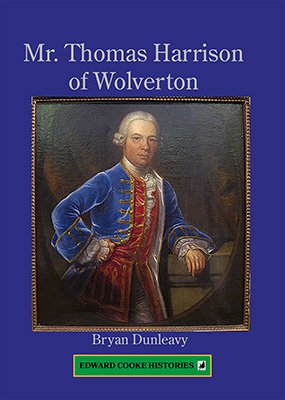
Thomas Harrison settled in Wolverton after he was appointed land agent to the Radcliffe Trust. He held similar roles for Earl Spencer and the Earl of Uxbridge.
In the 1780s he made a great deal of money while negotiating the copper mining interests of the Earl of Uxbridge and could afford to build Wolverton House for his family.
Harrison was involved in many industrial ventures and property acquisitions. Amongst his purchases was the land that later became Bletchley Park and the Bull and Three Swans at Stony Stratford.
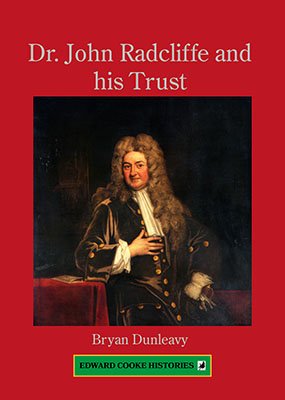
In 1713 Dr John Radcliffe, a successful London physician, purchased the manor of Wolverton. He died the following year and placed his affairs in the hands of a Trust. The intended beneficiary of Radcliffe’s will was the University of Oxford and the Trust was able to build the Radcliffe Library, the Radcliffe Infirmary and the Radcliffe Observatory. Until the late 1th century the income from the Wolverton Estate was sufficient to support these institutions.
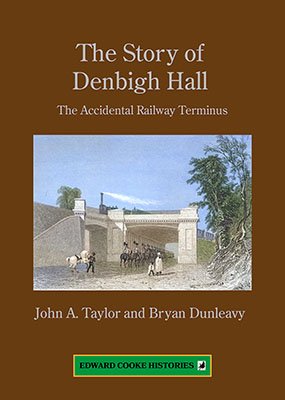
The London and Birmingham Railway experienced construction delays with the Wolverton Viaduct and the Kilosby Tunnel. The directors were anxious to open the line for Queen Victoria;s coronation in the Spring of 1838 and their solution was to detrain passengers at a place called Denbigh Hall and take them by road to Rugby. Denbigh Hall was no more than a roadside inn which became, for a few months in 1838, an unlikely terminus.
Bletchley station began life in 1838 as a modest wooden building but assumed more importance when eastern and western branch lines connected Bedford and Oxford, becoming a busy junction.